

Prototype photos
Turn a product photo into a patent drawing
Photos are not accepted as utility patent drawings in most cases, but they are a good starting point. Upload a photo of your prototype and get clean black-and-white line art in perspective, as a cross-section or as an exploded view, ready for reference numerals and USPTO sheets.
Drafting services: $33–43 per sheet and days of waiting. Here: under $1 a drawing, ready in minutes. See one free, then try 8 drawings for $5.
Next: check your plan and draw one free watermarked preview. Pay only if you want the full set.
One-time packs from $5, no subscription. Not exported yet? Full refund within 7 days. Have your attorney or agent review the drawings; we are not a law firm and do not give legal advice.
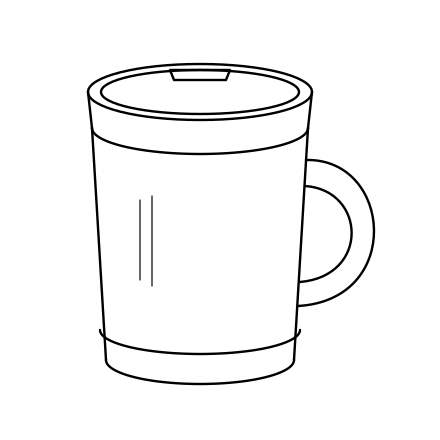
Every sheet is checked before you export
Numerals stay an editable layer until you export. The check measures the sheet itself, so the result is the same every time.
- ✓ Margins clear: top 2.5, left 2.5, right 1.5, bottom 1.0 cm
- ✓ Black and white only, 300 DPI
- ✓ Numerals at least 3.2 mm tall
- ! Numeral 14 used twice: fine only if it marks the same part
- ✓ FIG. 1 label and sheet number 1/3
Real drawings from the generator
Each one came from a one-sentence description, first try, not retouched. Numerals and the sheet layout are added in the editor.
More patent drawing examples by type →
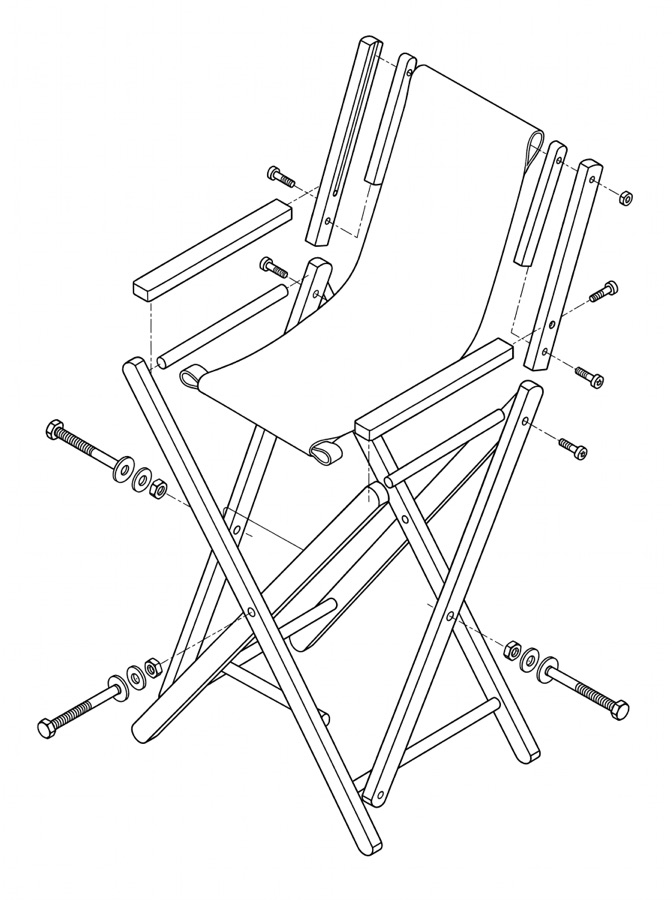
Exploded view
Folding camping chair: frames, seat, bolts and washers pulled apart along dashed lines.
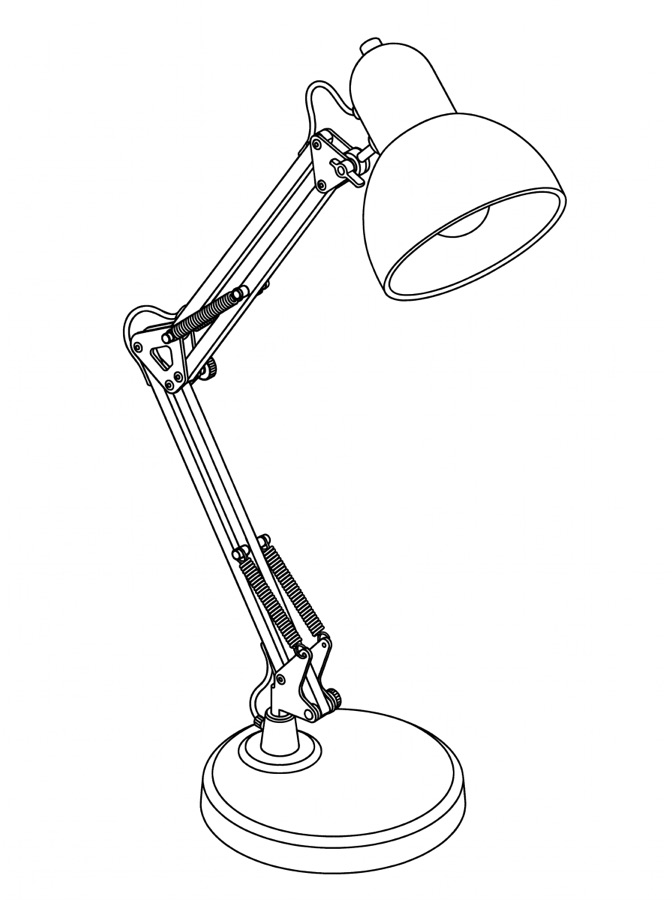
Perspective view
Desk lamp with spring arm, the usual FIG. 1 for a utility or design filing.
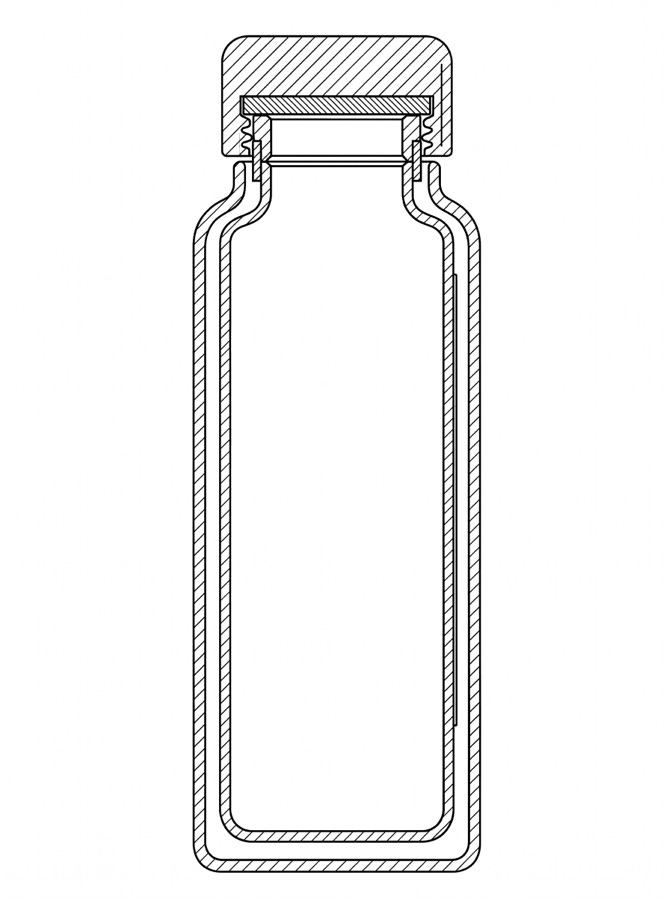
Cross-section
Insulated bottle cut in half: 45° hatching on the walls, the vacuum gap left white.
Can I just file the photo?
The USPTO accepts photographs in utility applications only when a drawing cannot show the invention, for example crystal structures, and a petition is needed. For a product, line drawings are the normal way.
Get the photo right
Shoot the prototype in even light on a plain background, fill the frame, and avoid strong reflections. One clear angle per figure works better than a busy scene with several objects.
Exploded and section views
An exploded view shows how the parts fit together; a section shows the inside, with cut surfaces hatched. Both come from the same photo, and you can redraw either with a note such as "cut through the valve".
Read before you draw
Answers on when photos are allowed as drawings, exploded views, cross-sections, perspective views, drawings from CAD and line thickness. Each one cites the rule it is based on.
One-time packs
Questions
Can I file the product photo itself as the drawing?
In a utility application, photographs are accepted only on petition and only when a photo is the one practical way to show the invention, as with some crystal or cell structures. A design application may use photographs instead of drawings, but cannot mix photos and drawings in one set.
What kind of photo gives the best drawing?
One object, even daylight, a plain background and the object filling most of the frame. Take one photo per angle you want as a figure, and avoid glare on shiny parts, since reflections can turn into stray lines.
Will the drawing match my prototype exactly?
Shape, proportions and visible parts are kept. Check every figure against the prototype before filing; if a detail is off, redraw with a short note such as "the hinge sits on the left". The first redraw of every figure is free.
Can one photo become an exploded or section view?
Yes. The model separates the parts or cuts the object along its length. For inner parts the photo cannot show, describe them in the note or add a second photo with the parts laid out (up to three images).
Other drawing tools
- Design patent viewsDesign patents
- Flowcharts & block diagramsMethod and software patents
- Sketch to patent drawingHand sketches
- Patent illustrationPatent illustrations without the wait
- Patent diagramPatent diagrams explained
- Patent drawing generatorAll drawing types
PatentDrawingsAI is not a law firm and does not give legal advice. Drawings are drafts for you and your attorney or agent to review before filing.