

Answer · Doing it yourself
Can I use CAD models for patent drawings?
Yes. CAD is one of the best sources, because every view comes from the same model at the same scale. Switch the view style to black hidden-line or line-only, export the front, side, top and perspective views, and remove dimensions, title blocks and colors. Then add reference numerals and lay out the views on patent sheets.
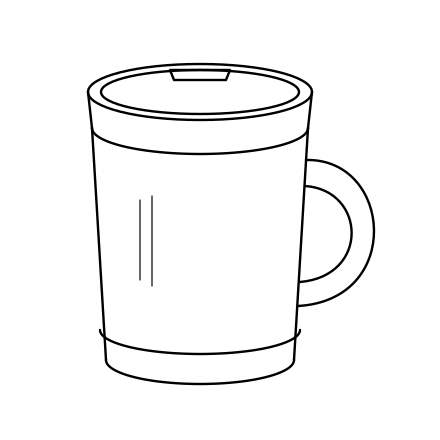
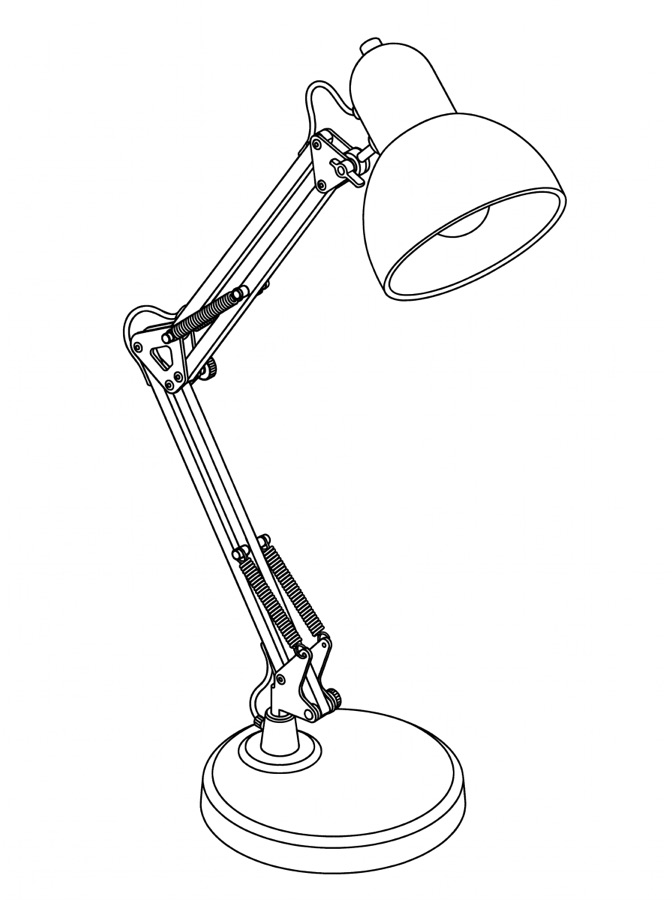
Draw this figure on a filing sheet
Upload a photo, sketch or CAD screenshot, or describe a method. You get black-and-white drawings with editable numerals on USPTO, EPO or PCT sheets. $19 for 40 drawings, one-time.
Open the drawing toolWhat a standard CAD drawing gets wrong
CAD software makes engineering drawings by default, and several of their normal features are not allowed on patent sheets. The view rule names two of them directly.
Views must not be connected by projection lines and must not contain center lines. — 37 CFR 1.84(h)
Turn off center marks, center lines and projection lines in the drawing template before export. The scale rule removes another standard element.
Indications such as “actual size” or “scale 1/2” on the drawings are not permitted since these lose their meaning with reproduction in a different format. — 37 CFR 1.84(k)
Delete the title block, the scale note, dimension lines, tolerances, surface finish symbols and revision tables. What remains should be the part outlines, with any hidden edges as dashes only where they help explain the invention.
Export settings with real numbers
Set the CAD sheet to US letter, 21.6 cm by 27.9 cm (8 1/2 by 11 inches), or A4, 21.0 cm by 29.7 cm. Use the same size for every sheet in the application. Leave margins of at least 2.5 cm (1 inch) at the top and left, 1.5 cm (5/8 inch) at the right and 1.0 cm (3/8 inch) at the bottom. That leaves a usable area of 17.6 cm by 24.4 cm (6 15/16 by 9 5/8 inches) on letter paper.
Every line, number, and letter must be durable, clean, black (except for color drawings), sufficiently dense and dark, and uniformly thick and well-defined. — 37 CFR 1.84(l)
The rule sets no exact thickness. A common starting point is about 0.5 mm for visible outlines and about 0.25 mm for hatching, shading and lead lines, which stay distinct after a two-thirds reduction. Export as PDF or as a 300 dpi, 1-bit black and white TIFF. A full-sight view at 300 dpi is about 2,081 by 2,888 pixels. Avoid exporting a shaded screenshot, which produces gray anti-aliased edges. The line thickness guide and the paper size guide go into more detail.
Numerals you add afterwards must be at least 0.32 cm (1/8 inch) tall and placed outside hatched areas where possible.
Shading and curved surfaces
Shaded CAD renders use gray tones, which do not reproduce. Shading in patent drawings is made from lines.
Spaced lines for shading are preferred. These lines must be thin, as few in number as practicable, and they must contrast with the rest of the drawings. — 37 CFR 1.84(m)
Tangent edges are the main clutter on curved parts. Most CAD programs can hide them or show them as faint lines; hide them, then add a few thin surface lines by hand or with a tool to show that a surface is round. For a design application, shading carries more weight because it shows the contour of the claimed surfaces, so read the design patent surface shading guide before you choose the line style.
Design applications also need a consistent set of views. CAD is useful here because you can export the front, back, left, right, top, bottom and a perspective from the same model and the proportions match. The design patent drawing tool lays those views out with the right labels.
Worked example: from a chair assembly to an exploded figure
Take a folding camping chair modelled as an assembly, like the exploded chair among our demo figures. The figure shows two side frames, the fabric seat, the cross bolts and the washers moved apart along dashed alignment lines, so a reader can see the order of assembly.
Exploded views, with the separated parts embraced by a bracket, to show the relationship or order of assembly of various parts are permissible. — 37 CFR 1.84(h)(1)
In the CAD program, create an exploded configuration with each part moved along one axis, switch the view style to visible lines only, hide tangent edges, and export a single perspective view. The bolts and washers come out small, so check that each one is still a clean closed outline at two-thirds size. If the exploded figure shares a sheet with another figure, enclose it in a bracket as the rule says.
Then number the parts: side frames 10 and 12, seat 14, bolt 16, washer 18, as a hypothetical example. Use the same numeral for a part in every figure where it appears. If you only have screenshots of the model, photo to patent drawing redraws them as line art at the same angle, and the exploded view guide covers the bracket and alignment lines in more detail.
The details
Settings
Use a white background, black edges, no shaded render and no tangent edges that clutter curved surfaces.
Remove the engineering extras
Dimensions, tolerances, title blocks and scale notes do not belong on patent drawings.
From a screenshot
If you only have screenshots, upload them and the tool will redraw them as line art at the same angle.
Questions people also ask
Which CAD programs work?
Any that can show line views: Fusion, SolidWorks, Onshape, FreeCAD, SketchUp and others.
Can I export directly to PDF?
You can, but you still need patent margins, FIG. labels and sheet numbers.
Do I need every view?
For a design patent, usually all six sides plus a perspective. Utility applications need the views that show the claimed features.
Should I keep hidden lines from the CAD export?
Only where they help explain the invention. Too many dashed hidden edges make a figure hard to read, and in a design patent broken lines mean the part is not claimed.
Official sources
Related questions
More in Doing it yourself
Draw this figure on a filing sheet
Upload a photo, sketch or CAD screenshot, or describe a method. You get black-and-white drawings with editable numerals on USPTO, EPO or PCT sheets. $19 for 40 drawings, one-time.
Open the drawing toolPhoto to patent drawingThis page explains public rules and our tool. It is not legal advice; ask a registered patent attorney or agent about your application.