

Answer · Costs
Should I use a patent drawing service?
A drafting service is worth it when the invention is mechanically complex, the deadline is close and you have no time to learn the rules, or your attorney prefers a known draftsperson. For simpler products, flowcharts and provisional filings, many inventors make the drawings themselves with a tool that formats and checks sheets, then have an attorney or agent review them.
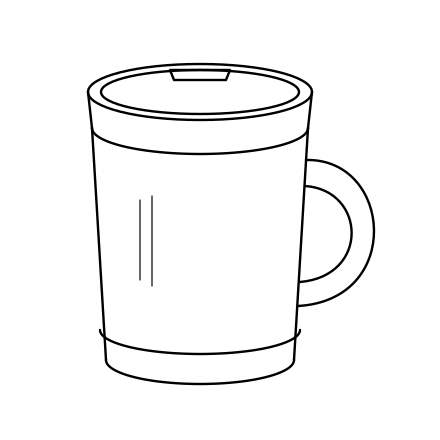
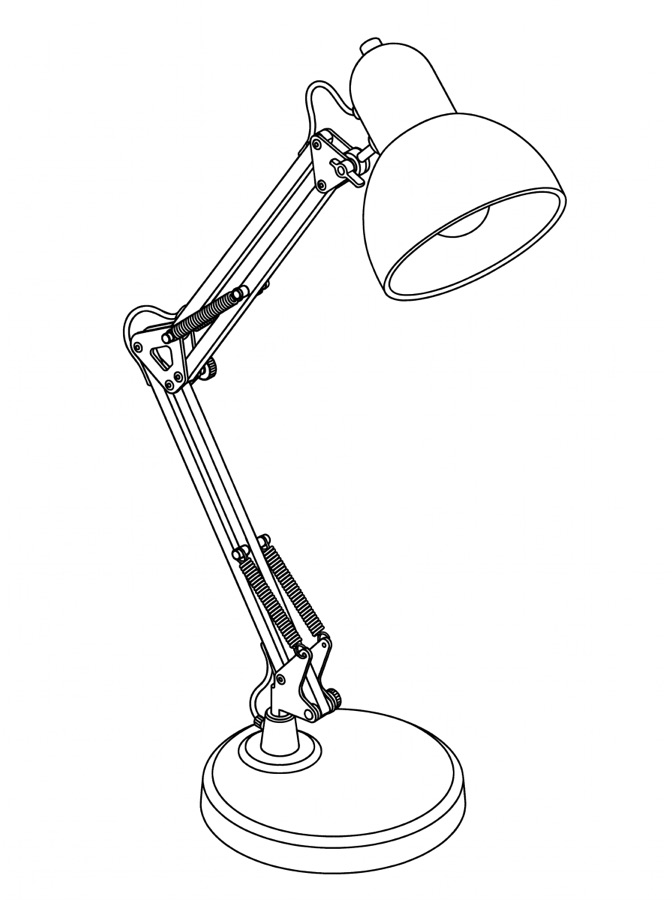
Draw this figure on a filing sheet
Upload a photo, sketch or CAD screenshot, or describe a method. You get black-and-white drawings with editable numerals on USPTO, EPO or PCT sheets. $19 for 40 drawings, one-time.
Open the drawing toolWhat a drafting service does and what stays with you
A drafting service turns your photos, sketches or CAD files into figures that meet the USPTO format rules. It does not decide what the drawings must show. That depends on your claims, and the rule puts the burden on the application itself.
The drawing in a nonprovisional application must show every feature of the invention specified in the claims. — 37 CFR 1.83(a)
So before you order, list each claimed feature and name the figure that will show it. A draftsperson works from what you send. If a claimed latch only appears in your description and never in your photos, it will be missing from the proofs unless you point it out.
Corrections are also your responsibility. Keep your source files and the service's final files, because a later objection or a continuation application may need the same figures redrawn or extended.
A proof checklist with the actual numbers
When the proofs come back, check them against the rules yourself. The format items have fixed numbers you can measure on a printed sheet.
Each sheet must include a top margin of at least 2.5 cm. (1 inch), a left side margin of at least 2.5 cm. (1 inch), a right side margin of at least 1.5 cm. (5/8 inch), and a bottom margin of at least 1.0 cm. (3/8 inch) — 37 CFR 1.84(g)
Keep figures, numerals and notes out of the margins, and check that no frame is drawn around the drawing area, which the same rule forbids. Numerals and letters must be at least 0.32 cm (1/8 inch) tall, which the font size guide explains. Sheet numbers read like 1/4, 2/4 and so on, centered at the top inside the usable area, as covered in the sheet numbering guide.
The same part of an invention appearing in more than one view of the drawing must always be designated by the same reference character, and the same reference character must never be used to designate different parts. — 37 CFR 1.84(p)(4)
Read every numeral against your description. A numeral in a figure that the text never mentions, or a part in the text with no numeral in any figure, is a common reason for an objection. The reference numbers guide has a simple way to track them.
Worked example: briefing a service for a bottle cross-section
Suppose your invention is a double-wall insulated bottle, like the cross-section among our demo figures. A good brief names each part with the numeral you want: outer wall 12, inner wall 14, vacuum gap 16, lid 18, gasket 20. These numerals are a hypothetical example; use the ones from your own description.
Tell the service where the section is cut. The rule expects the cutting plane to be marked on another view.
The plane upon which a sectional view is taken should be indicated on the view from which the section is cut by a broken line. — 37 CFR 1.84(h)(3)
So the brief asks for a front view, FIG. 1, with a broken line labelled 2 and 2 at its ends, and FIG. 2 as the section seen in the direction of the arrows. Ask for the cut walls to be hatched with evenly spaced lines at about 45 degrees and for the vacuum gap to stay white, because an empty space is not a cut solid. When the proof arrives, check that the hatching stops where numerals 12 and 14 sit. The cross-section guide shows the full layout.
When doing it yourself is reasonable
Many inventors make their own drawings, and the rules allow it. The guide to drawing your own covers the trade-offs. It works best when the product has a few clear parts, when the filing is a provisional, or when the figures are flowcharts and block diagrams.
If you have photos of a prototype, photo to patent drawing converts each angle into black line art on a filing sheet. If you start from a pencil sketch, sketch to patent drawing does the same. In both cases you place the numerals and run the format check before export.
You can also split the work: settle the views and numerals yourself, then pay a service or have your attorney review only the final set. Plans on this site are one-time, starting at $19 for 40 drawings, and nothing here is legal advice or a promise that an examiner will accept the drawings.
The details
What to send a service
Photos or CAD of each side, a list of parts with the numerals you want, which views you need, and your draft description so numerals match the text.
What to check in proofs
Every claimed feature is shown, numerals match the description, the same part has the same numeral in every figure, and no text is in the margins.
Mixing both
Some inventors draft figures with an AI tool to settle the views, then pay a service only to polish the final set. That usually costs less than starting from photos.
Questions people also ask
How fast are services?
Turnaround varies by firm and complexity; ask before ordering, and ask what a rush costs.
Who owns the drawings?
Agree in writing that you own the drawings. On this site, drawings you make are yours.
Do services file for me?
Drafting services make drawings only. Filing is done by you or your attorney or agent.
What should I ask a service before ordering?
Ask how they price (per sheet or per figure), how many revision rounds are included, whether corrections after an examiner's objection cost extra, and which file formats they deliver.
Official sources
Related questions
More in Costs
Draw this figure on a filing sheet
Upload a photo, sketch or CAD screenshot, or describe a method. You get black-and-white drawings with editable numerals on USPTO, EPO or PCT sheets. $19 for 40 drawings, one-time.
Open the drawing toolPatent drawing generatorThis page explains public rules and our tool. It is not legal advice; ask a registered patent attorney or agent about your application.