

Answer · By invention type
What drawings does an IoT patent need?
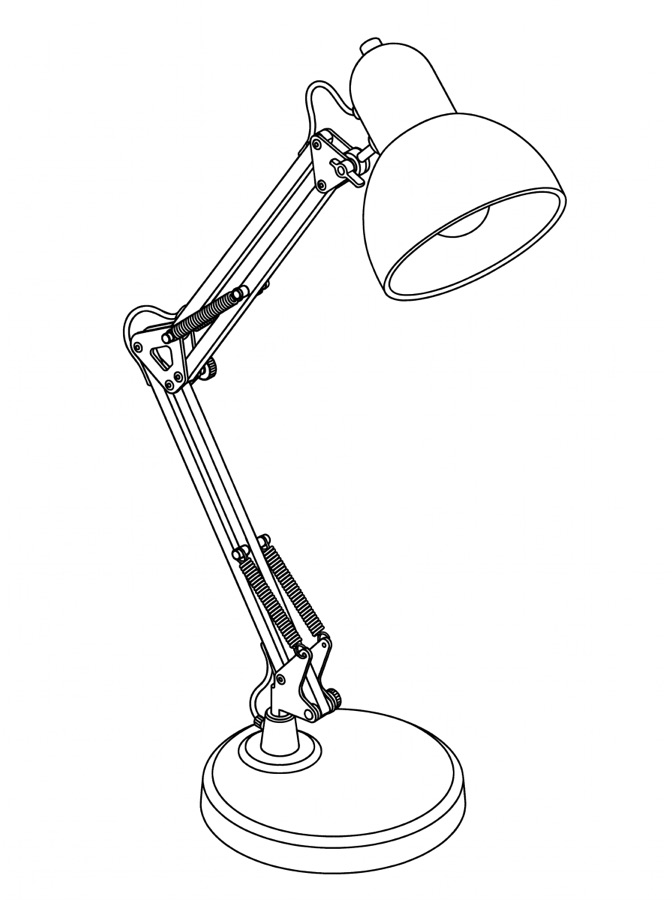
An IoT application typically has a network figure linking the sensor nodes, gateway, cloud service and user device, a hardware block diagram of one node (sensor, microcontroller, radio, power source), a sequence or signal diagram of the messages exchanged, and a flowchart of the control logic. If the enclosure or mounting is new, add a line drawing of it. Once you type out the nodes and their connections, PatentDrawingsAI produces the diagrams in minutes; forty figures cost $19 with no plan to cancel later.
Draw this figure on a filing sheet
Upload a photo, sketch or CAD screenshot, or describe a method. You get black-and-white drawings with editable numerals on USPTO, EPO or PCT sheets. $19 for 40 drawings, one-time.
Open the drawing toolThe details
Network topology figure
Show how many kinds of node there are and how they connect: mesh, star through a hub, or direct to the cloud. Draw wireless links as lines with a short legend such as the protocol name, but only where a claim names that protocol.
One node in detail
Pick a representative node and break it into its sensor, processor, memory, transceiver and battery or mains supply. Rule 1.83(a) allows these standard parts as captioned rectangles, and the novel circuit or firmware module gets the detail.
Messages over time
Pairing, provisioning, firmware updates and alerts are exchanges between devices. A sequence diagram with vertical lifelines for node, gateway and server shows who sends what in which order, which a flowchart alone hides.
Edge versus cloud processing
When the claims hinge on where data is processed, the figures should make that location explicit: put the filtering or inference block inside the node outline or inside the server outline, not floating between them.
Writing the description to draw from
Give each device a role and a number, then list links as pairs, such as node 202 to gateway 204 over a low-power radio, gateway 204 to server 206 over the internet. Clear pairs become clean connecting lines.
Common mistakes
- Using cloud clip-art, brand logos or app store icons in the figures.
- Showing dozens of identical nodes when two or three with an ellipsis make the point.
Questions people also ask
Should the mobile app screens be included?
Only where the claims involve the interface. If so, redraw the screen as line art inside a phone outline with numerals on the claimed elements.
How do I show that a node sleeps to save power?
A state diagram with sleep, wake and transmit states, or a timing diagram of radio activity, shows power behaviour better than a block figure.
Can one figure show both hardware and software?
It can, but separate figures usually read better: hardware blocks in one, functional modules or method steps in another.
Official sources
Related questions
More in By invention type
Draw this figure on a filing sheet
Upload a photo, sketch or CAD screenshot, or describe a method. You get black-and-white drawings with editable numerals on USPTO, EPO or PCT sheets. $19 for 40 drawings, one-time.
Open the drawing toolFlowcharts & block diagramsThis page explains public rules and our tool. It is not legal advice; ask a registered patent attorney or agent about your application.