

Answer · By invention type
What drawings does a 3D printed product patent need?
A 3D printed product is drawn like any other article: perspective and orthographic views of the part, plus sections or cutaways wherever a claim depends on internal lattices, channels or print-in-place joints. If the printing process is claimed too, add a flowchart of its steps. From an STL render or slicer screenshot, PatentDrawingsAI traces clean black line views in minutes, and $19 with no subscription buys 40 of them.
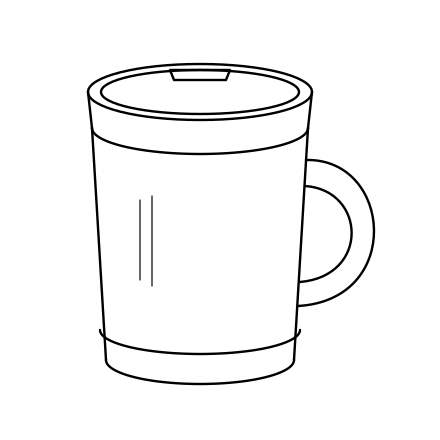
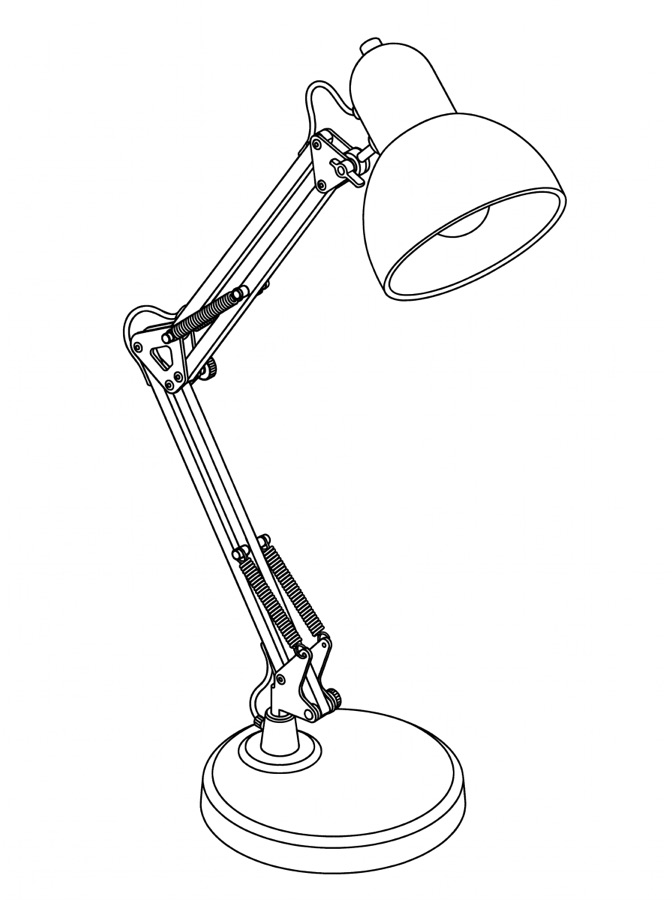
Draw this figure on a filing sheet
Upload a photo, sketch or CAD screenshot, or describe a method. You get black-and-white drawings with editable numerals on USPTO, EPO or PCT sheets. $19 for 40 drawings, one-time.
Open the drawing toolThe details
Strip the mesh facets
Triangulated STL edges and slicer colour bands do not belong to the invention. Rule 1.84(l) wants dense, dark, uniformly thick lines, so keep only true edges and drop the tessellation.
Infill and lattices need a cut
Gyroid infill, conformal cooling channels and hollow cores are invisible from the outside. Draw the section line across an exterior figure (1.84(h)(3)) and hatch only the solid walls so the open cells still read.
Print-in-place hinges and chains
Parts printed already assembled are easiest to follow in their assembled state; sketch any swung or folded pose in broken lines, or give it its own figure per 1.84(h)(4).
Process claims become numbered boxes
Build orientation, support removal, curing or sintering steps can be drawn as a flowchart; a standard printer may appear as a labeled rectangle, which 1.83(a) permits for conventional equipment.
Common mistakes
- Filing a coloured slicer preview; colour in a utility case needs the 1.84(a)(2) petition first
- Showing layer lines as surface texture when the claims never mention them
- Writing a print scale such as "1:1" next to a figure, which 1.84(k) rules out
Questions people also ask
Should visible print layers appear in the drawing?
Only if the layer pattern itself is part of what you claim. Otherwise they add visual noise that can be mistaken for shading.
Can a design application cover a printed object?
Yes. A design filing protects the article's ornamental appearance shown in its views, however the article is manufactured.
What makes the best input for the tool?
A render with flat, even lighting or a CAD viewport screenshot taken square to each face. Heavy ambient occlusion tends to turn into unwanted grey.
Official sources
Related questions
More in By invention type
Draw this figure on a filing sheet
Upload a photo, sketch or CAD screenshot, or describe a method. You get black-and-white drawings with editable numerals on USPTO, EPO or PCT sheets. $19 for 40 drawings, one-time.
Open the drawing toolPhoto to patent drawingThis page explains public rules and our tool. It is not legal advice; ask a registered patent attorney or agent about your application.