

Answer · Types of figures
What is the difference between top and bottom views in a patent?
A top view looks straight down at the article in its normal resting or use position, and a bottom view looks straight up at its underside. Both are flat orthographic views in the standard design set. A flat, unornamented bottom may be omitted only if the description says so (MPEP 1503.02). PatentDrawingsAI generates top, bottom and the other five design views from one photo in minutes; the 7-view set uses 7 credits, under $4 of the $19 pack.
Draw this figure on a filing sheet
Upload a photo, sketch or CAD screenshot, or describe a method. You get black-and-white drawings with editable numerals on USPTO, EPO or PCT sheets. $19 for 40 drawings, one-time.
Open the drawing toolThe details
Orientation comes first
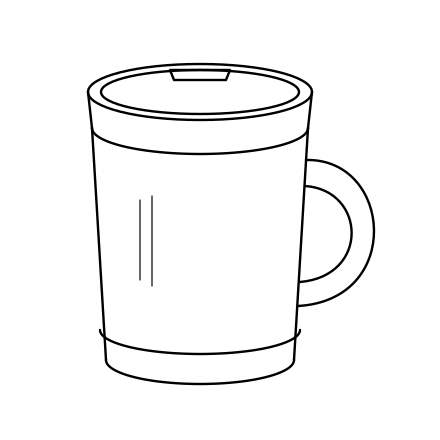
Pick the normal position of the article and keep it across all views. If the top view of a mug shows the opening, the bottom view must show the base of the same mug, not a rotated one.
Flat bottom statement
MPEP 1503.02 allows the bottom view to be left out if the specification states the bottom is flat and devoid of surface ornamentation. Do not call a surface unornamented when it has visible structure.
Describe each view
Under 37 CFR 1.154 the description lists each figure, for example 'FIG. 6 is a top plan view' and 'FIG. 7 is a bottom plan view'.
Views must agree
Features visible in the top view must line up with the front and side views. Inconsistent views can lead to a rejection under 35 U.S.C. 112.
Common mistakes
- Showing the bottom view from a slight angle instead of straight on
- Omitting the bottom view without the flat-bottom statement
- Drawing the top view mirrored relative to the front view
Questions people also ask
What if the bottom is hidden in use?
It is still part of the article's appearance. Show it, or claim only part of the design and draw the bottom in broken lines.
Are top and plan view the same?
Yes. 'Top plan view' is the usual wording in figure descriptions.
Do utility patents need top and bottom views?
Only if they help show the claimed features; utility figures are chosen for what they explain, not as a fixed set.
Official sources
Related questions
More in Types of figures
Draw this figure on a filing sheet
Upload a photo, sketch or CAD screenshot, or describe a method. You get black-and-white drawings with editable numerals on USPTO, EPO or PCT sheets. $19 for 40 drawings, one-time.
Open the drawing toolDesign patent viewsThis page explains public rules and our tool. It is not legal advice; ask a registered patent attorney or agent about your application.